Stream Restoration
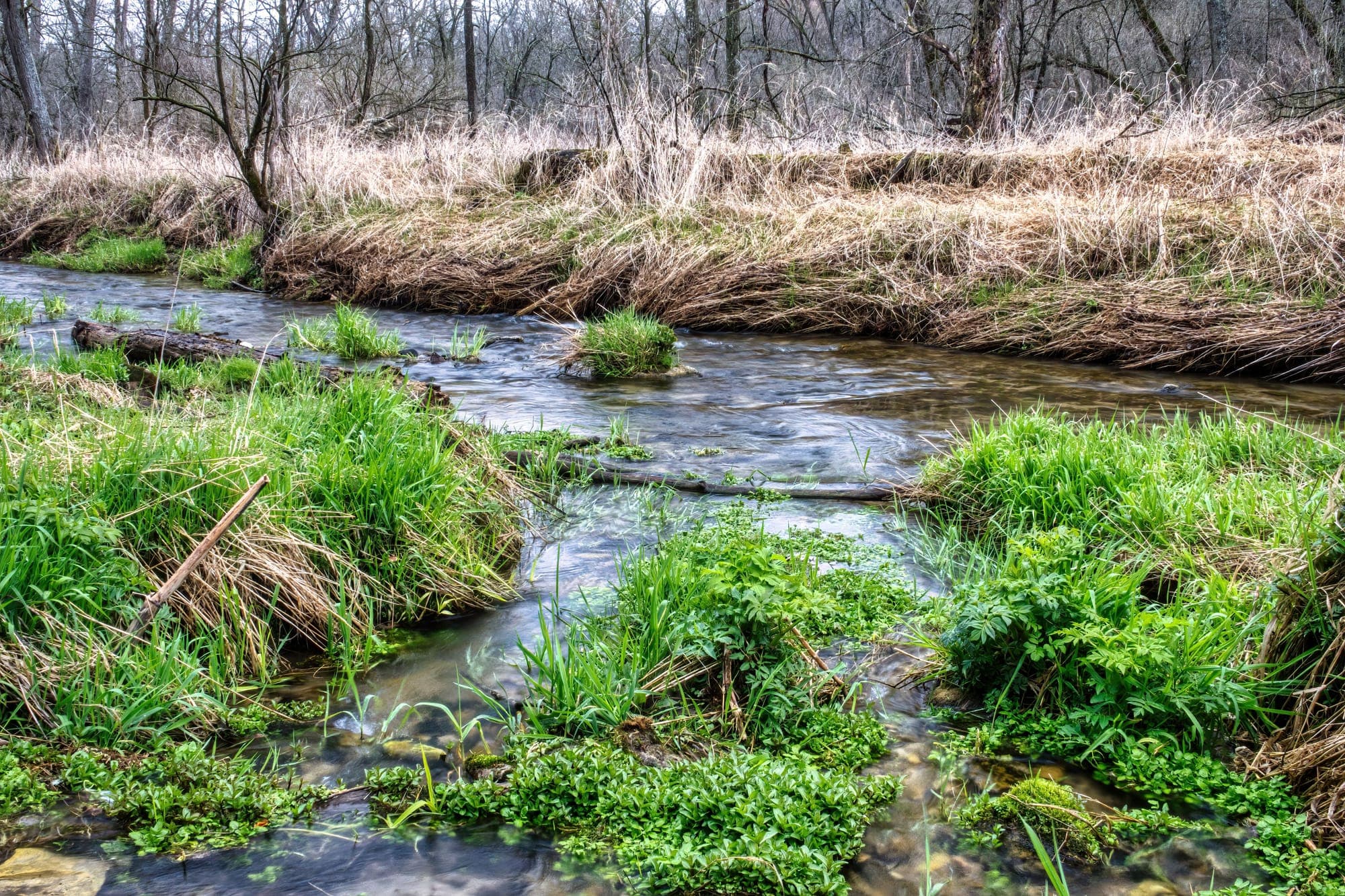
We design stream restoration and stabilization projects that arrest incision and bank erosion, reconnect channels to their floodplains, and improve habitat, carrying each project from survey and modeling through permitting and construction.
Our approach
Stream work begins with a topographic survey of the channel and floodplain, a geomorphic assessment of where and why the channel is failing, and a hydrologic and hydraulic model of the reach. We compare shear stress and velocity against the bed and bank materials to size riffle grade controls, set the new profile and floodplain bench elevations, and detail bank protection with stone, wood, and vegetation where it is needed. Construction sequencing, stream diversion, and erosion and sediment control are drawn into the plans so the channel is stable at every stage of the work, and we stake the alignment, observe construction, and survey the as-built reach.
Typical analyses and design considerations
- Channel incision, bank erosion, and headcut assessment
- Floodplain connectivity and bench elevations
- Hydrologic and hydraulic modeling of the reach
- Shear stress and velocity comparisons for bed and bank materials
- Riffle grade control spacing, elevation, and stone sizing
- Bank protection with stone, wood, and vegetation
- Outfall, culvert, and utility crossing interactions
- Nontidal wetland and waterway permitting
- Construction sequencing, diversion, and erosion and sediment control
- Planting plan and post-construction monitoring
Project applications
Urban and suburban stream stabilization, headwater and agricultural ditch restoration, floodplain reconnection, and stream reaches tied to stormwater retrofit and treatment wetland projects across Maryland and the Mid-Atlantic.
Related services - Often paired with this work.
Restoration and resiliency projects rarely involve a single service. These are the services we most often deliver alongside this one.
- Stormwater Management. Pond retrofits, submerged gravel wetlands, bioretention, and new practices sized to local criteria and built to be maintained. Learn more →
- Treatment Wetlands. Engineered wetlands that capture agricultural and stormwater runoff and remove nutrients and sediment before they reach downstream waters. Learn more →
- Construction Support. RTK GPS stakeout, construction observation and administration, field redlines, as-built survey, and the monitoring that follows. Learn more →
Have a project in mind?
Contact Sustainable Science, LLC to discuss how we can support planning, permitting, design, and construction.