Treatment Wetlands
Sustainable Science, LLC designs engineered treatment wetlands that treat runoff from farm fields and developed land, sized to the drainage area and laid out so that water takes the long way through planted cells before it leaves the site.
Our approach
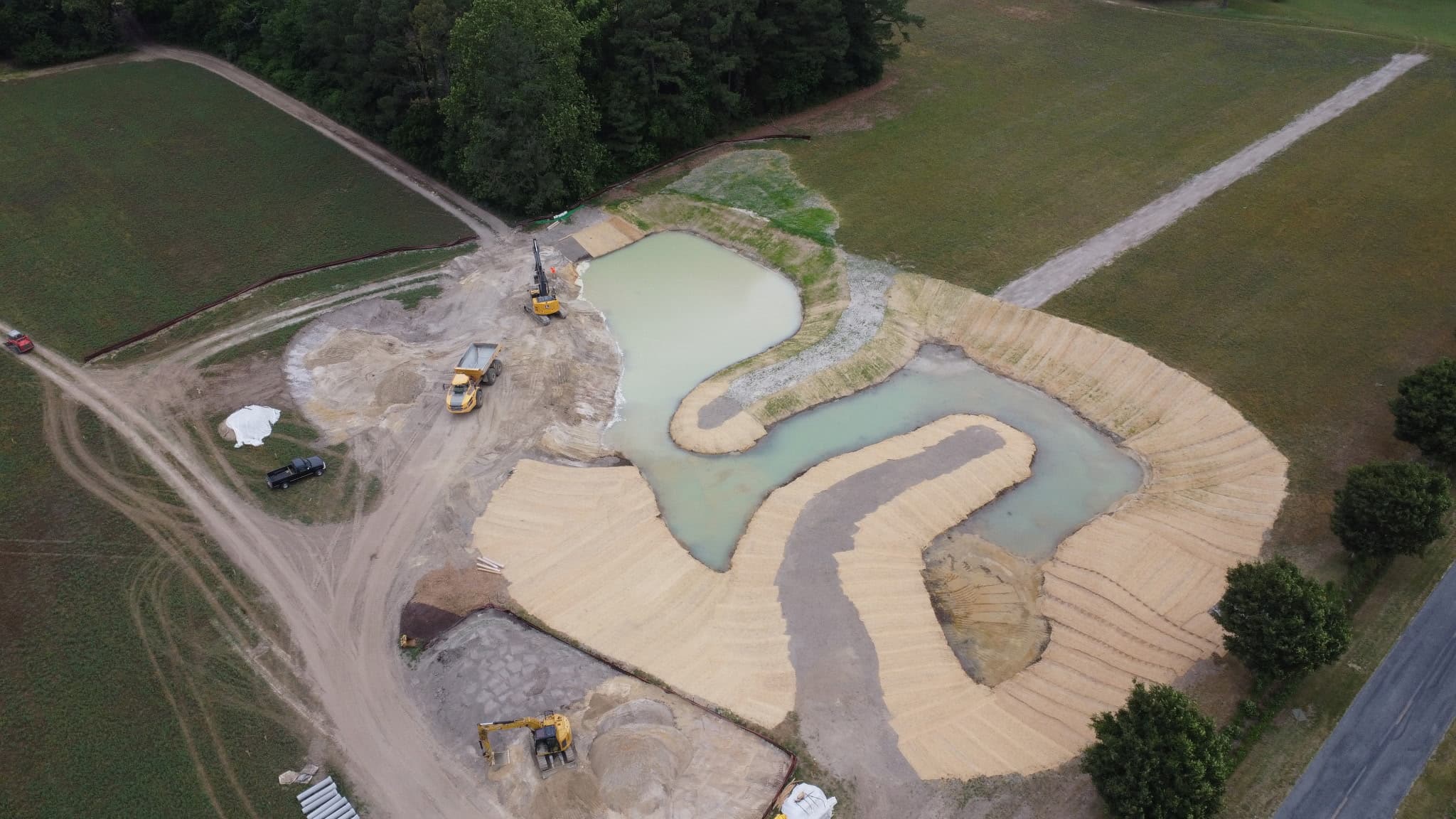
We start by mapping the contributing drainage area and running the hydrology to set the treatment volume the wetland must hold. The cells are then laid out to lengthen the flow path, with shallow pools, planted benches, and a controlled outlet that slows the water, settles sediment, and gives wetland vegetation time to take up nutrients. Grading plans balance the earthwork so excavated material can be reused on site, often to raise low ground that stays wet, and planting plans match species to the water depth in each cell. We estimate nitrogen, phosphorus, and sediment removal from the drainage area and published removal rates, prepare the permit and construction plans, and support construction through stakeout, site visits, and as-built survey.
Typical analyses and design considerations
- Contributing drainage area and runoff hydrology
- Treatment volume and residence time
- Cell layout, flow path length, and depth zones
- Inlet, outlet, and emergency spillway design
- Grading and earthwork balance
- On-site reuse of excavated material
- Planting plan by water depth
- Nutrient and sediment load reduction estimates
- Upstream flooding relief and storage
- Nontidal wetland and stormwater permitting
Project applications
Farm drainage on the Eastern Shore, runoff from developed land, retrofits of existing ponds and ditches, and nutrient reduction projects for landowners, conservation districts, and nonprofits working in the Chesapeake Bay watershed.
Related services - Often paired with this work.
Restoration and resiliency projects rarely involve a single service. These are the services we most often deliver alongside this one.
- Stormwater Management. Pond retrofits, submerged gravel wetlands, bioretention, and new practices sized to local criteria and built to be maintained. Learn more →
- Stream Restoration. Channel stabilization and floodplain reconnection designed from hydraulic analysis, with riffle grade controls and bank protection that hold up in the field. Learn more →
- Construction Support. RTK GPS stakeout, construction observation and administration, field redlines, as-built survey, and the monitoring that follows. Learn more →
Have a project in mind?
Contact Sustainable Science, LLC to discuss how we can support planning, permitting, design, and construction.