Treatment WetlandDenton, Maryland

Agricultural Treatment Wetland

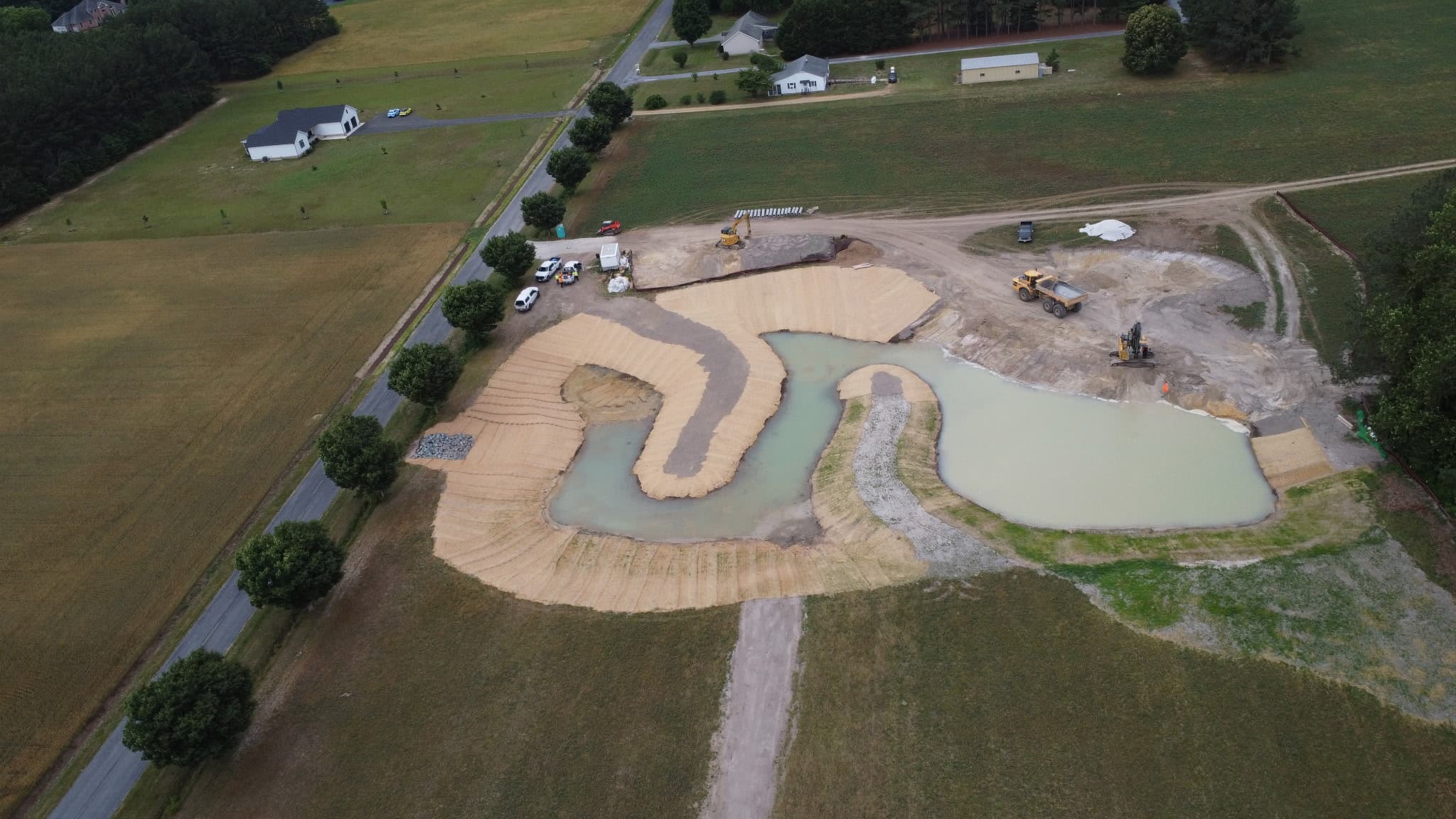
A new engineered treatment wetland on an Eastern Shore farm in Denton, Maryland, designed to capture and treat agricultural runoff, reduce nutrient and sediment loads to downstream waters, and relieve an upstream flooding problem. Excess material from construction is being reused on site to raise low, previously unfarmable areas of the field.

Download PDF summaryOne-sheet project summary (PDF)
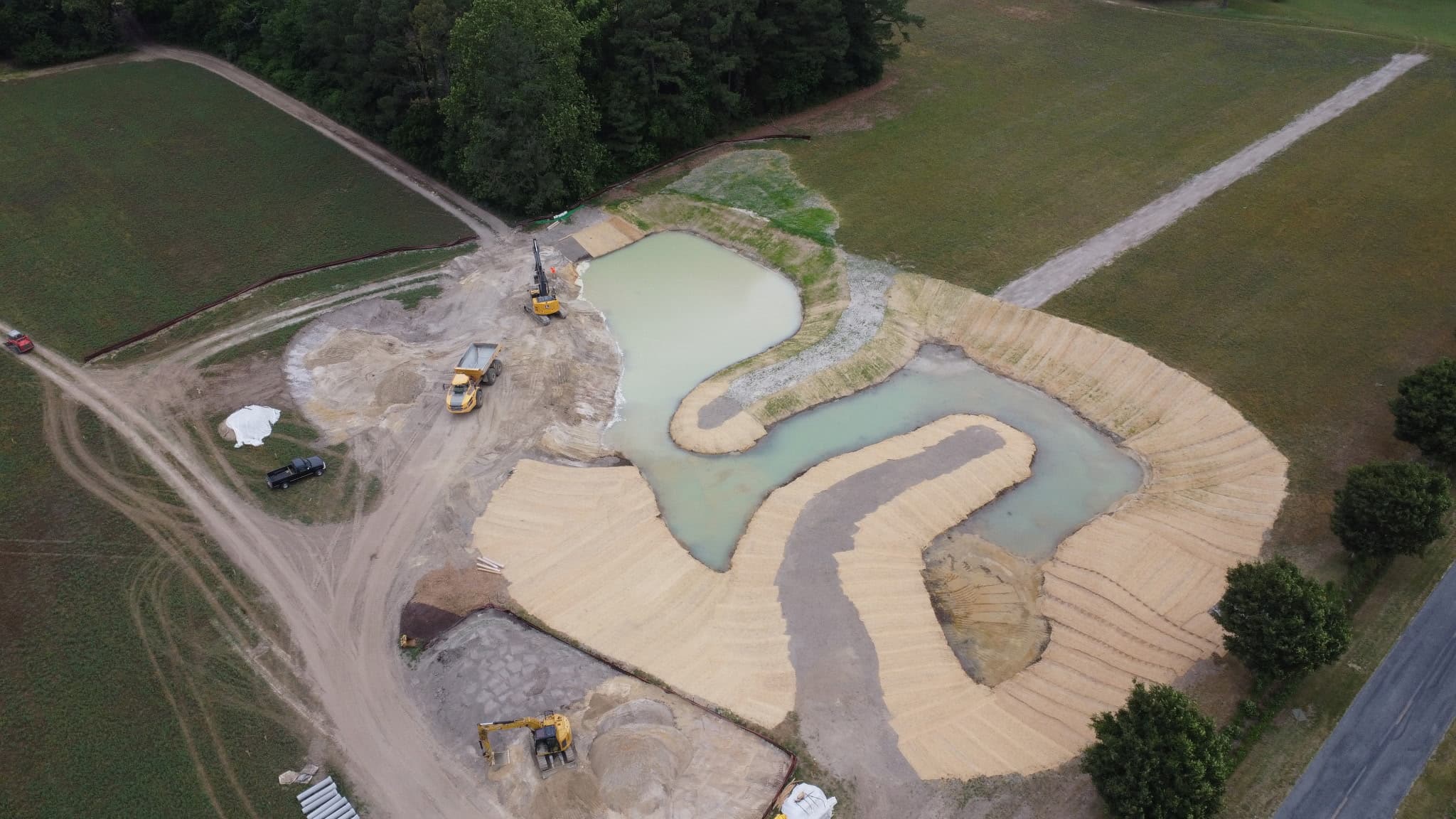
Aerial view of the Denton, Maryland treatment wetland under construction, showing sinuous planted wetland cells and freshly stabilized banks set within an agricultural field.
Total nitrogen removed
≈ 490 lb/yr
Total phosphorus removed
≈ 56 lb/yr
Total suspended solids removed
≈ 19 tons/yr

Services provided

  • Stormwater retrofit design
  • Treatment wetland design
  • Hydrologic and hydraulic analysis
  • Grading and earthwork
  • Permitting support
  • Construction support

Project overview

Sustainable Science, LLC designed an engineered treatment wetland on a working farm near Denton, Maryland, on the Eastern Shore. The wetland captures and treats agricultural runoff before it reaches downstream waters, reducing the nutrient and sediment loads that affect water quality across the Chesapeake Bay watershed.

The system provides about 1.35 acre-feet of treatment volume and captures runoff from a contributing drainage area of roughly 95 acres. It was laid out as a series of sinuous cells that lengthen the flow path, slow the water, and give sediment and nutrients time to settle and be taken up by wetland vegetation. The project is currently under construction, with completion targeted for early summer 2026.

Aerial view of the engineered treatment wetland from the opposite end, showing the serpentine flow path and freshly stabilized banks alongside the roadway and adjacent farm fields.

An engineered treatment wetland

The wetland was graded into a meandering flow path that routes runoff through a sequence of shallow pools and planted benches. The banks were shaped and stabilized with erosion-control matting and seeding so the new wetland establishes quickly and holds up through construction-phase storms.

As vegetation takes hold, the cells will provide both water quality treatment and habitat, turning a drainage problem into a functioning wetland that works with the surrounding farm.

Water quality benefits

Treating runoff from a contributing drainage area of about 95 acres, the wetland is estimated to remove roughly 490 pounds of total nitrogen, 56 pounds of total phosphorus, and 19 tons of total suspended solids each year before the water leaves the site.

These figures are planning-level estimates based on the 95-acre contributing drainage area, typical annual nutrient and sediment loading rates for Eastern Shore cropland, and published removal efficiencies for treatment wetlands. Actual performance will depend on land use, inflow conditions, hydrology, and the established wetland vegetation.

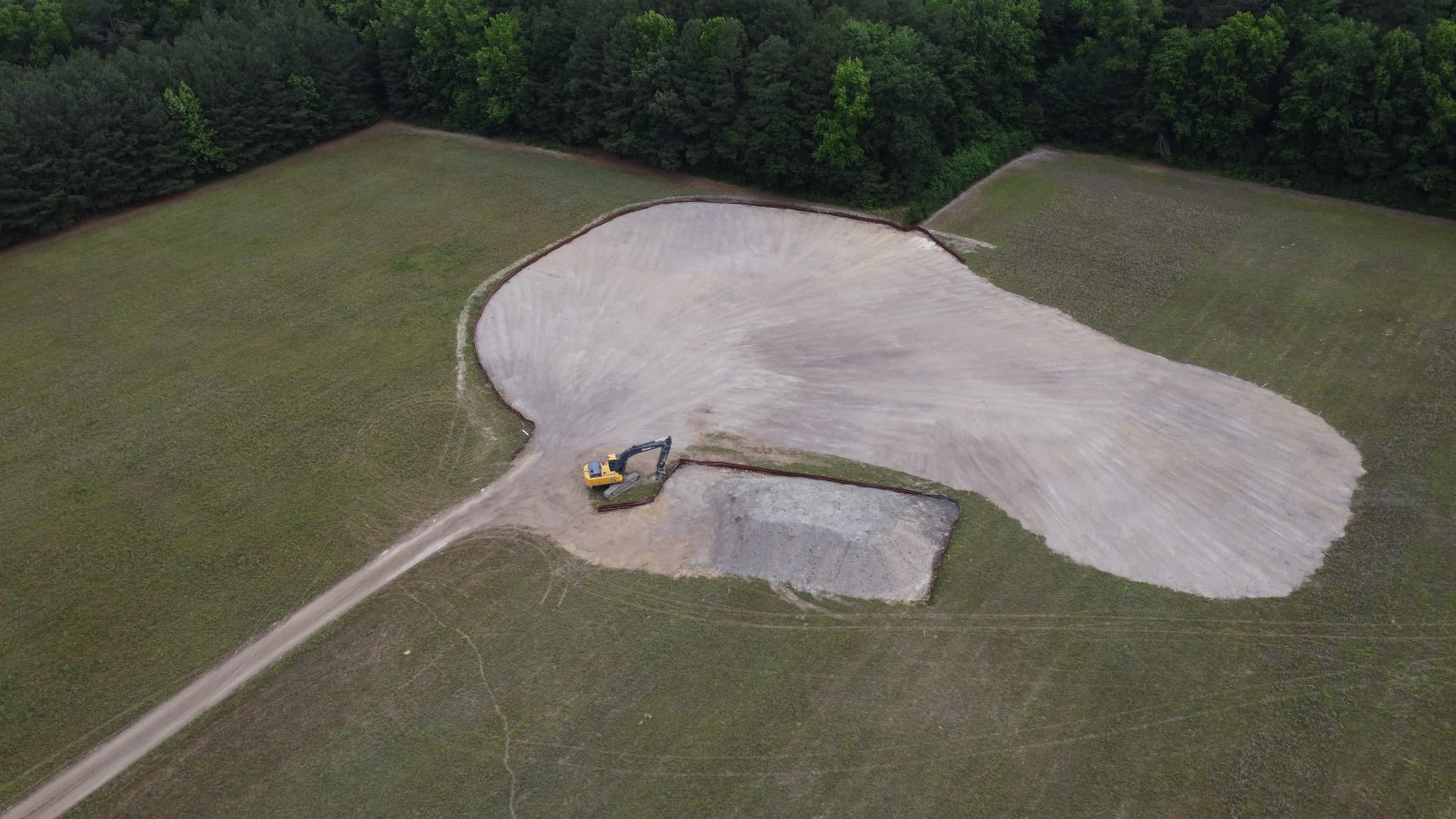
Aerial view of a low area of the agricultural field being raised with excavated material to return it to productive farmland.

Reusing excavated material on site

Rather than haul the excavated material off site, the project reuses it on the same farm. Excess spoil is being placed in low areas of the field that historically stayed wet and could not be farmed.

Raising and regrading those low spots returns them to productive farmland, balances the project earthwork, and avoids the cost and disturbance of trucking material away.

Solving an upstream flooding problem

Beyond water quality, the wetland was sited and sized to relieve a persistent upstream flooding problem. By providing storage and a controlled outlet, the system holds back runoff during storms and releases it gradually, reducing flooding that had affected the area upstream.

The result is a single project that improves water quality, reduces flooding, and puts unfarmable ground back into production.

More projects - Other work from our team.

A look at the range of restoration, resiliency, and ecological design work Sustainable Science, LLC delivers.

Have a similar project in mind?

Contact Sustainable Science, LLC to discuss how we can support planning, permitting, design, and construction for your restoration or resiliency project.